Case № 3 · printable detective game
The Secret Garden Case
The Case of the Vanished Orchid
Digital download (ZIP with PDFs). Price includes VAT where it applies; the exact amount is shown at checkout. Personal licence for private events.
A look inside
Real pages from the kit
These are the actual printable pages, rendered from the files you download. Answers and the host guide are not shown.
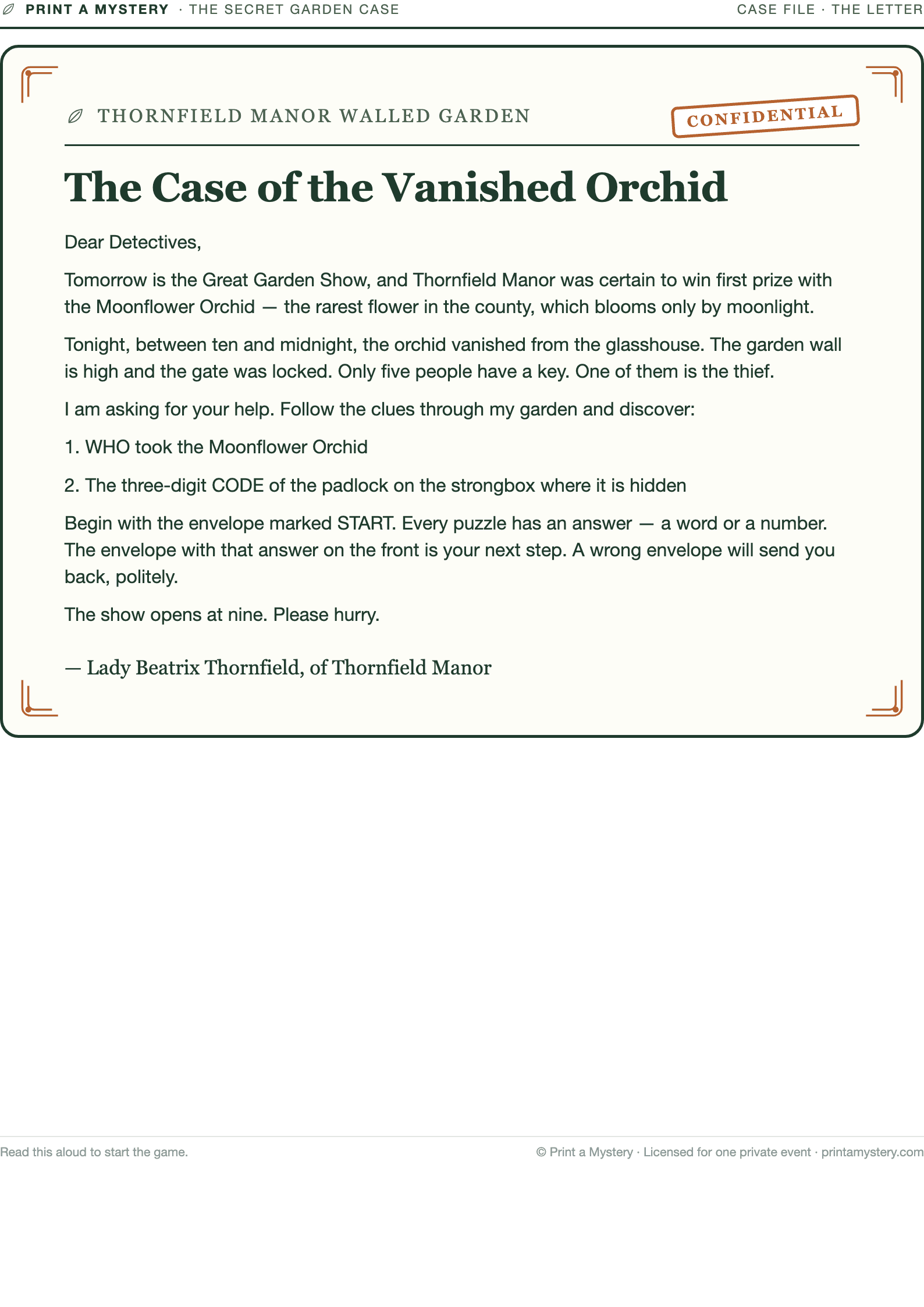
The letter from Lady Thornfield — read aloud to start
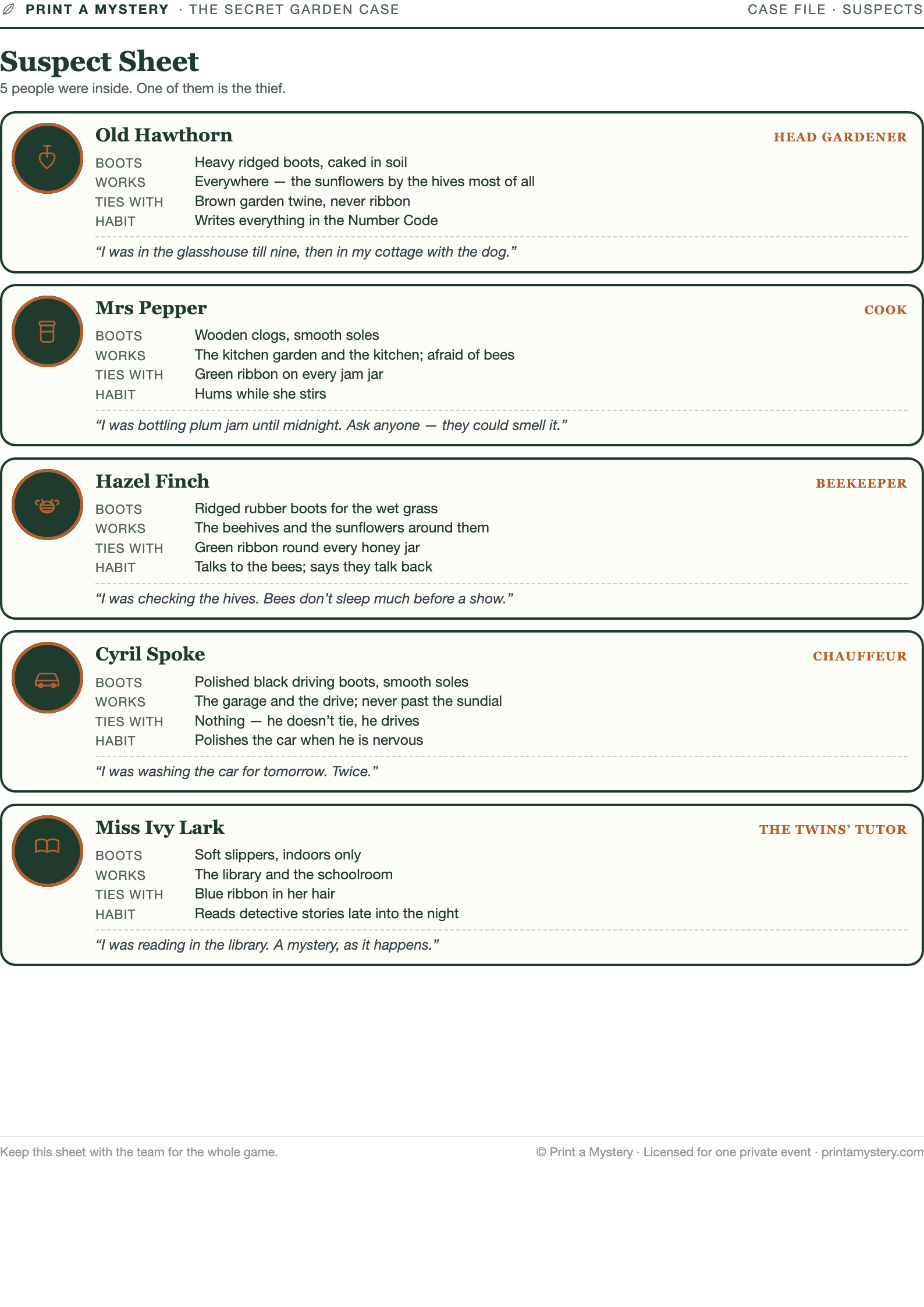
Suspect Sheet — five suspects, four traits each
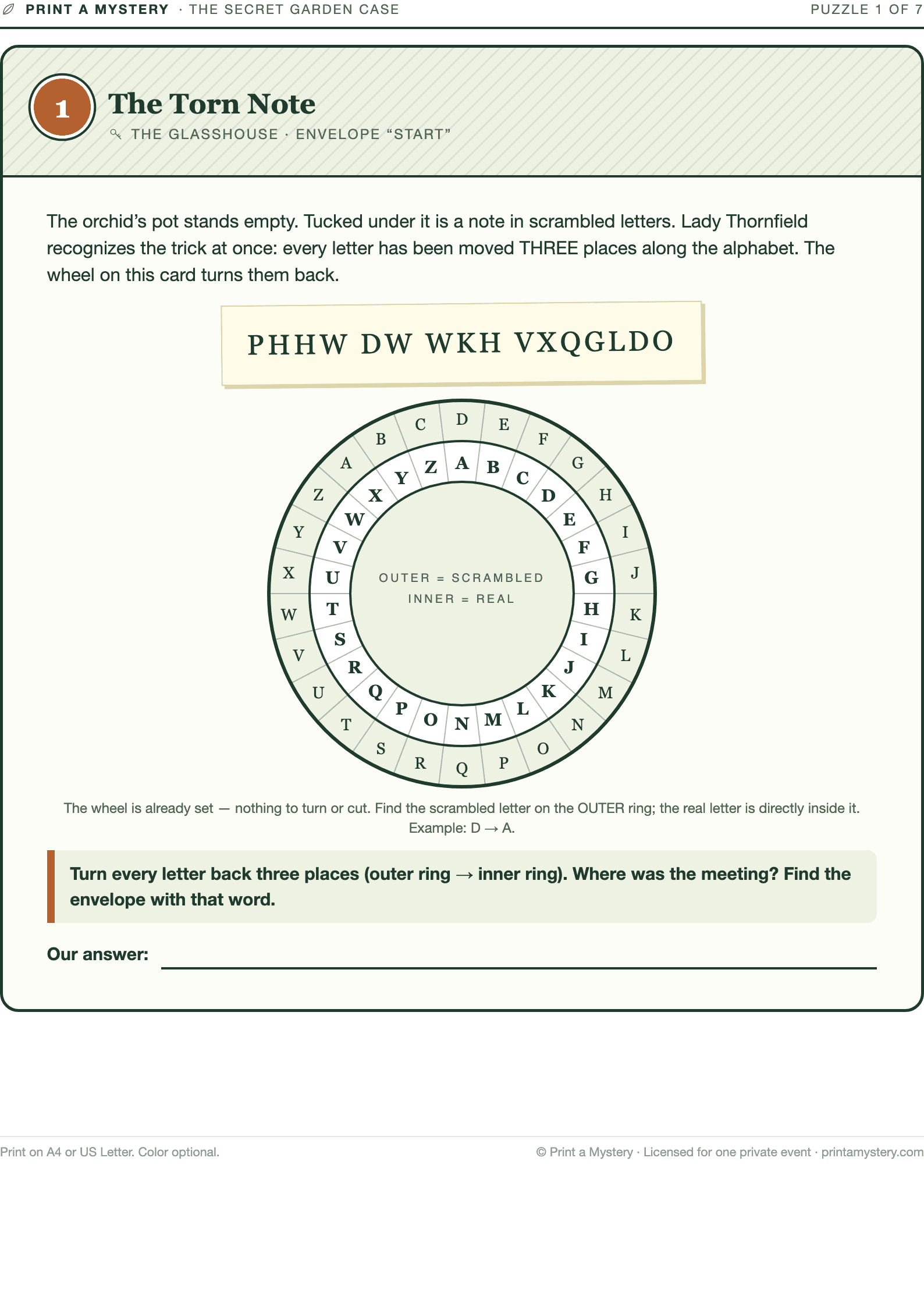
Puzzle 1 — The Torn Note
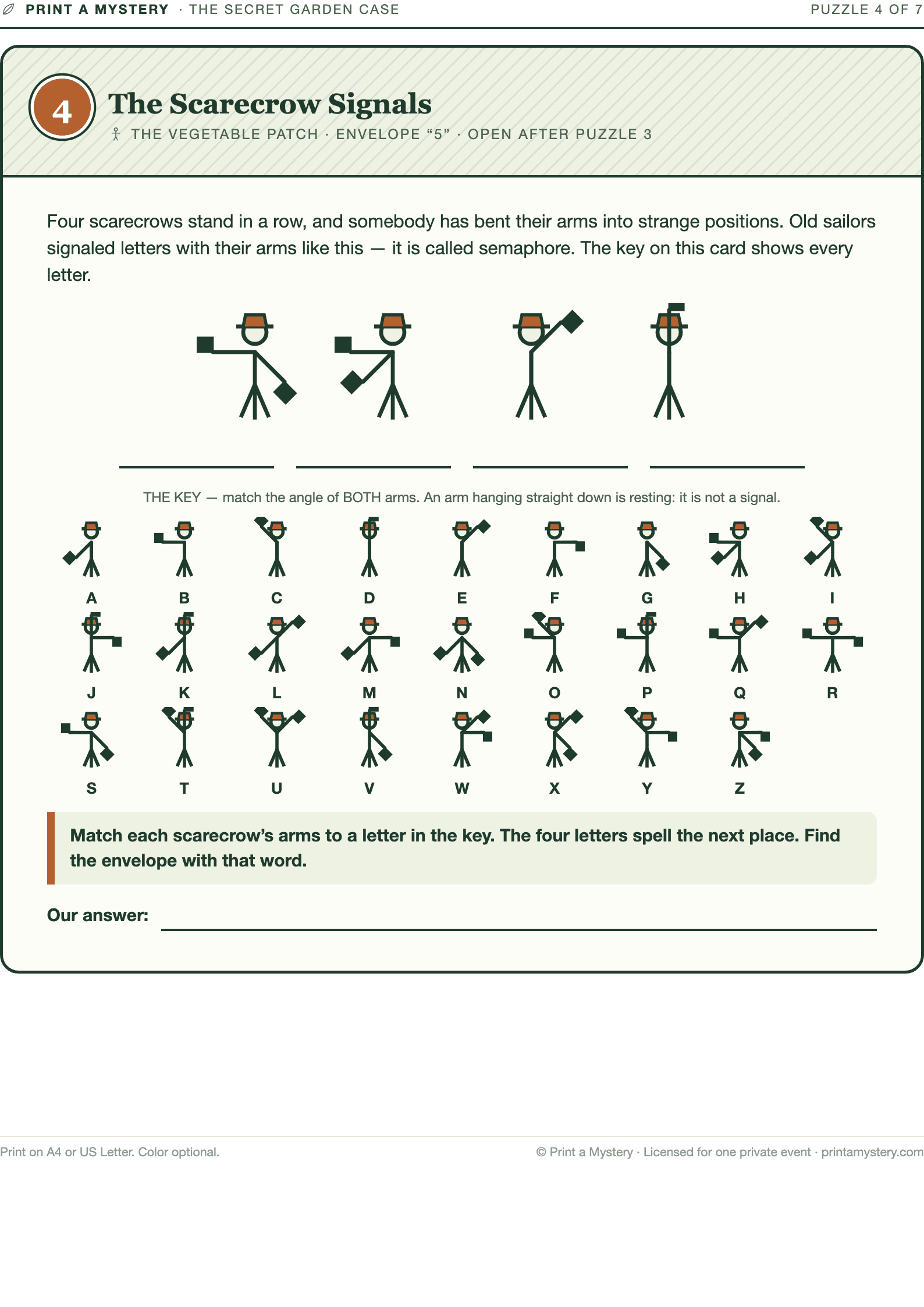
Puzzle 4 — The Scarecrow Signals
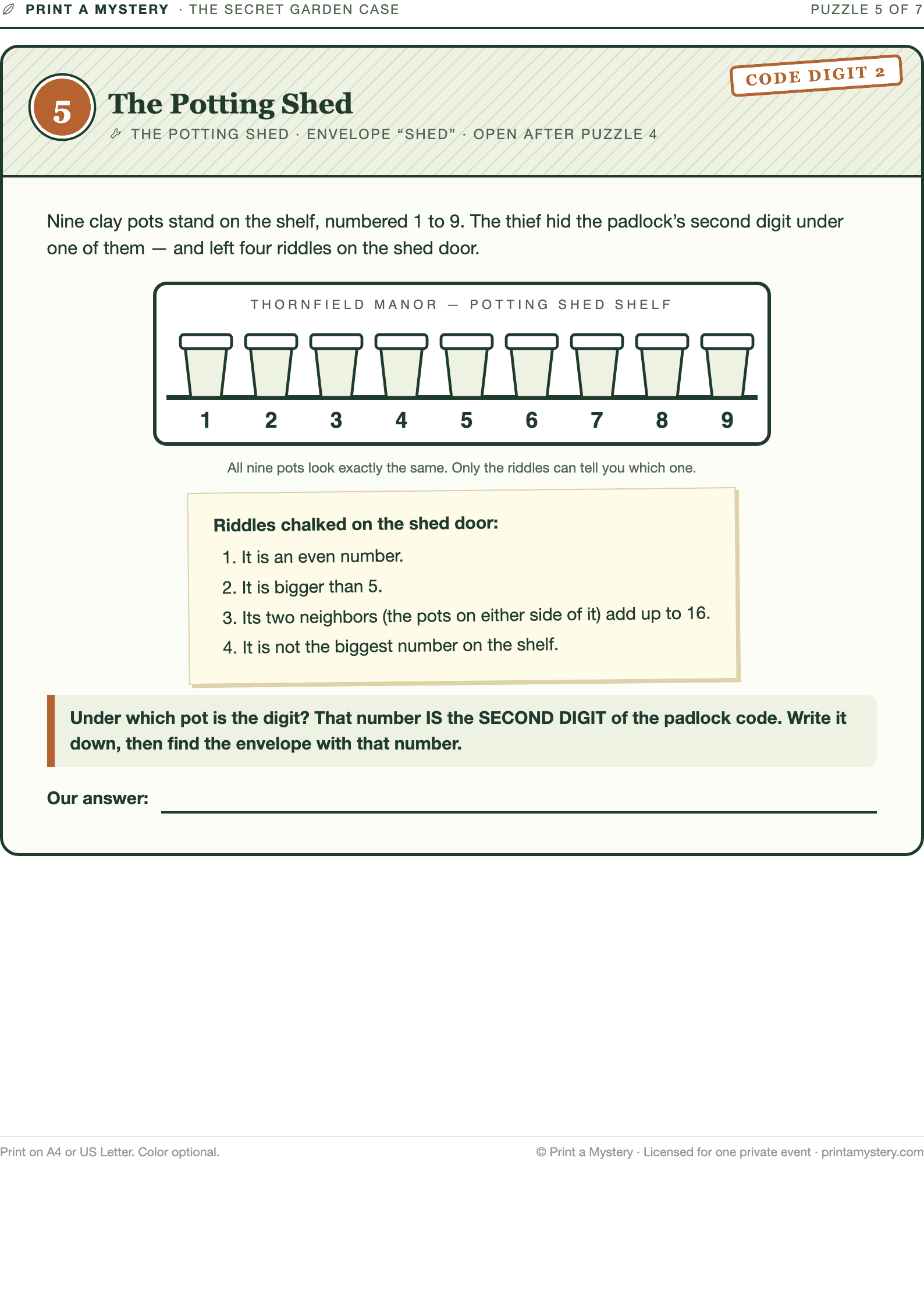
Puzzle 5 — The Potting Shed
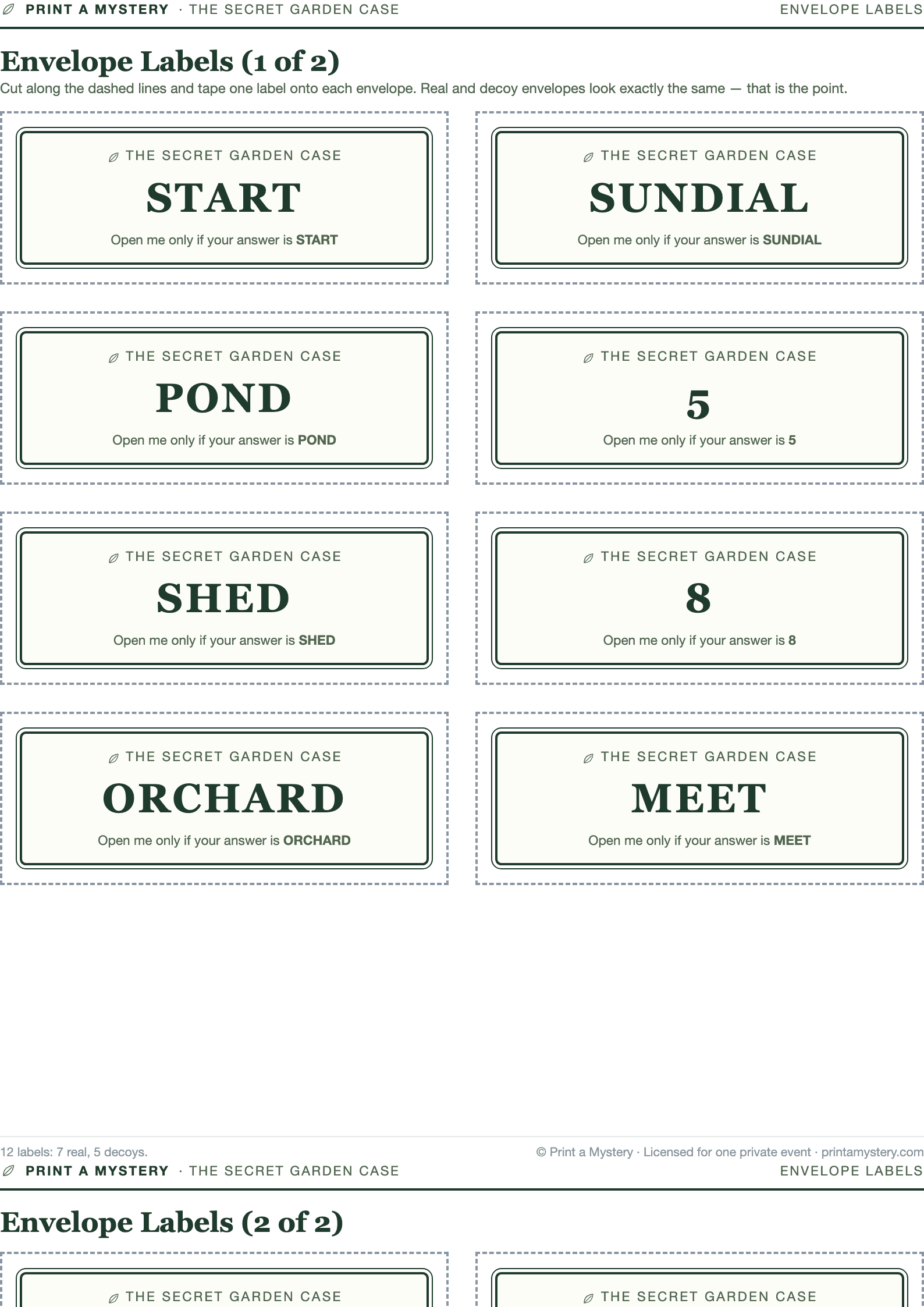
Envelope labels — real and decoy look the same
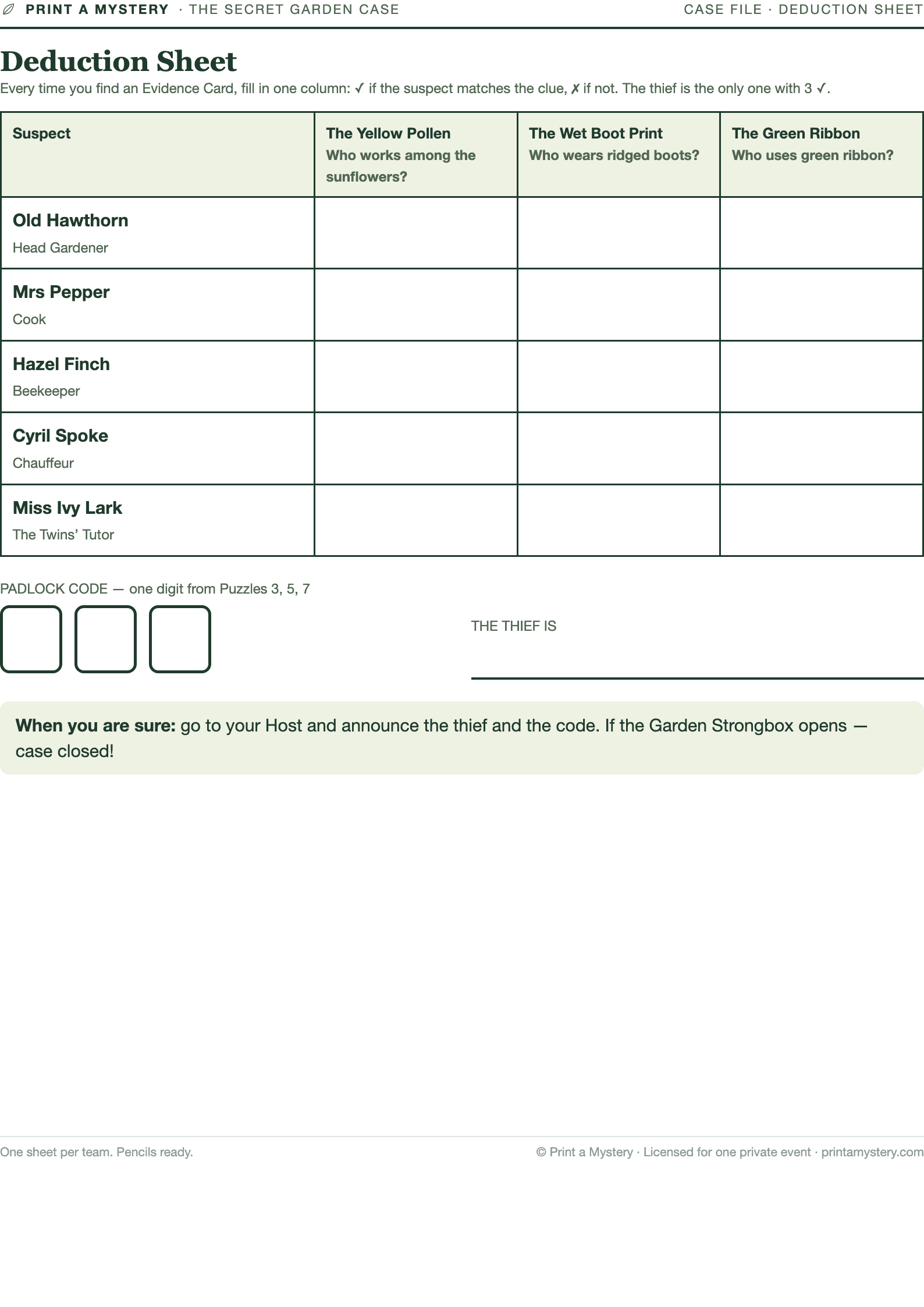
Deduction Sheet — three clues, one culprit
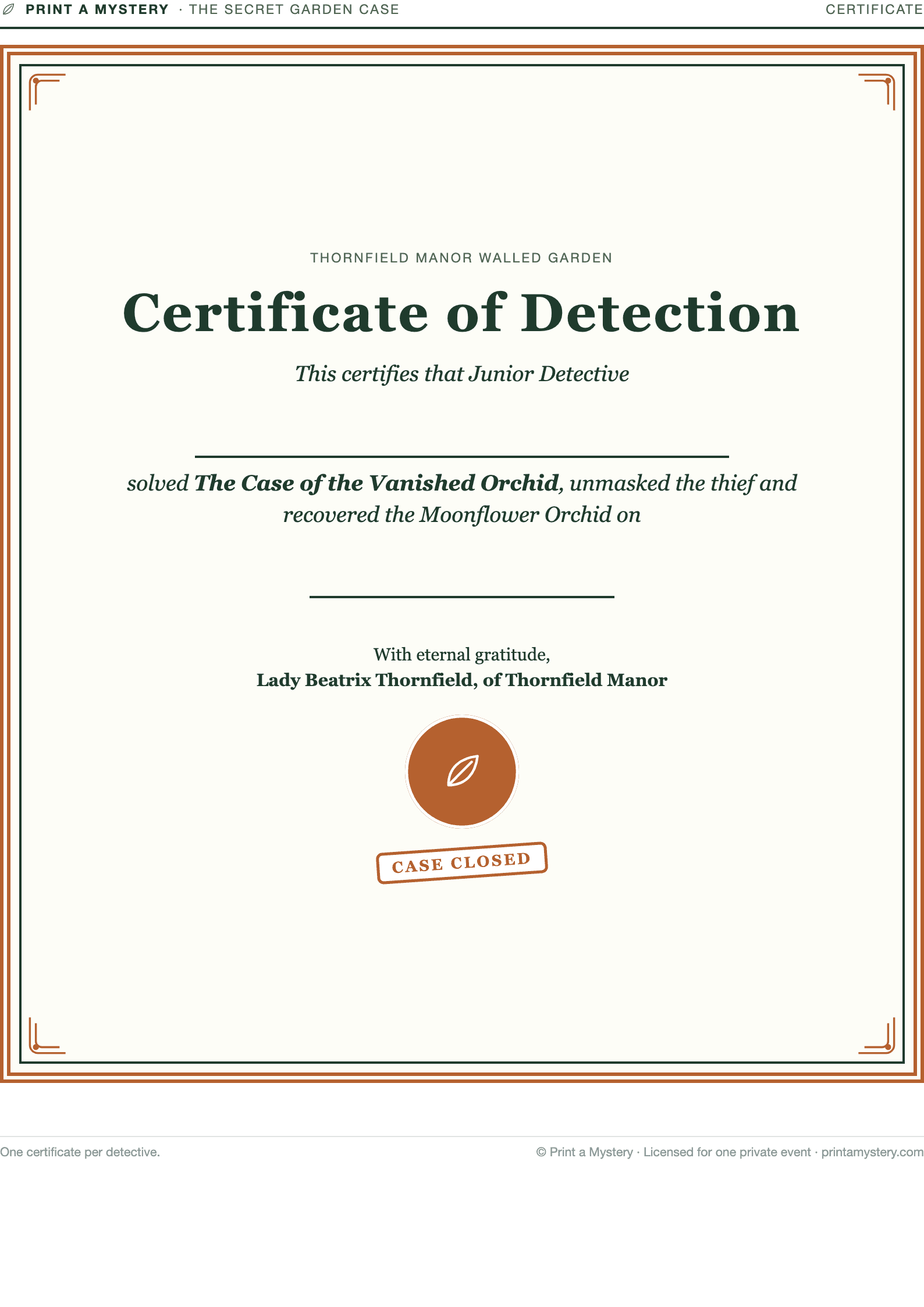
Certificate of Detection
The story
The night before the Great Garden Show, the Moonflower Orchid — the rarest flower in the county — vanishes from the glasshouse at Thornfield Manor. The wall is high, the gate was locked, and only five people have a key.
A cipher wheel, pebbles with painted letters, frogs on lily pads, four scarecrows signalling with their arms, riddles chalked on the shed door and the head gardener’s number-coded ledger lead the detectives round the walled garden.
Pollen, a wet boot print and a torn green ribbon narrow five suspects to one. The thief’s reason is kinder than it looks — and the orchid is waiting in a strongbox with a three-digit padlock.
Seven puzzles, one trail
Different skills in every envelope, so every detective gets a moment to shine. No outside knowledge, no phones.
- 1
The Torn Note
Every letter moved three places. The wheel on the card turns them back.
- 2
The Sundial
Painted pebbles in a square. Cross out the pairs; the rest spell a place.
- 3
The Lily Pond
Spotted, striped and plain frogs. Count the right ones for the first digit.
- 4
The Scarecrow Signals
Four scarecrows with bent arms. Old sailors’ semaphore — the key shows every letter.
- 5
The Potting Shed
Nine upside-down pots, four riddles chalked on the door. One pot hides a digit.
- 6
The Gardener’s Ledger
Old Hawthorn writes everything in the Number Code. The last line was written tonight.
- 7
The Garden Plan
The dog followed the scent. Follow the turns through nine plots to the hiding place.
What you print
- Host Guide (7 pages): 20-minute setup, how to run the game, a 3-level hint ladder for every puzzle, full answer key, troubleshooting
- Case File: the opening letter, Suspect Sheet with five suspects, Deduction Sheet, Notebook
- Puzzle Cards: 7 linked puzzles — cipher wheel, letter cross-off, counting, scarecrow semaphore, logic riddles, number code, a garden plan
- 3 Evidence Cards and 5 Decoy Cards (wrong answers get a friendly nudge, not a “no”)
- 12 Envelope Labels, party Invitations (two per page) and a Certificate of Detection
- Every file in A4 and US Letter, designed to print in black and white
About 25 pages per team and game. Everything is black-and-white friendly; the suspect sheet and certificate look lovely on thicker paper.
Questions about this case
- Can I hide the envelopes around the house?
- Yes. The games work on one table or as a treasure hunt — same cards. Tell the detectives which rooms are in play.
- What if they get stuck?
- The Host Guide has three hints for every puzzle. Give them one at a time; the third is the answer. Decoy envelopes also catch the most common wrong answers automatically.
- Is it scary?
- No. Something goes missing; nobody is hurt and the culprit has a very human reason. Suitable for sensitive kids.
- Can I use it in a classroom or at a paid event?
- Classrooms and clubs are fine with the personal licence as long as nobody pays to play. For paid events, see For hosts.
- Can I play it again with the same kids?
- Once they know the culprit, the mystery is solved. Print a second copy for a different group, or pick another case.